Seeing cockroaches after treatment: is it normal?
Updated .
You prepared the kitchen, the technician came, and a day or two later there is a cockroach on the counter again. Sometimes there seem to be more than before. In most cases that is part of how the treatment works, not a sign that it failed. This guide explains what to expect week by week, what helps, what undoes the treatment, and the signs that mean you should call us back.
Is it normal to see cockroaches after treatment?
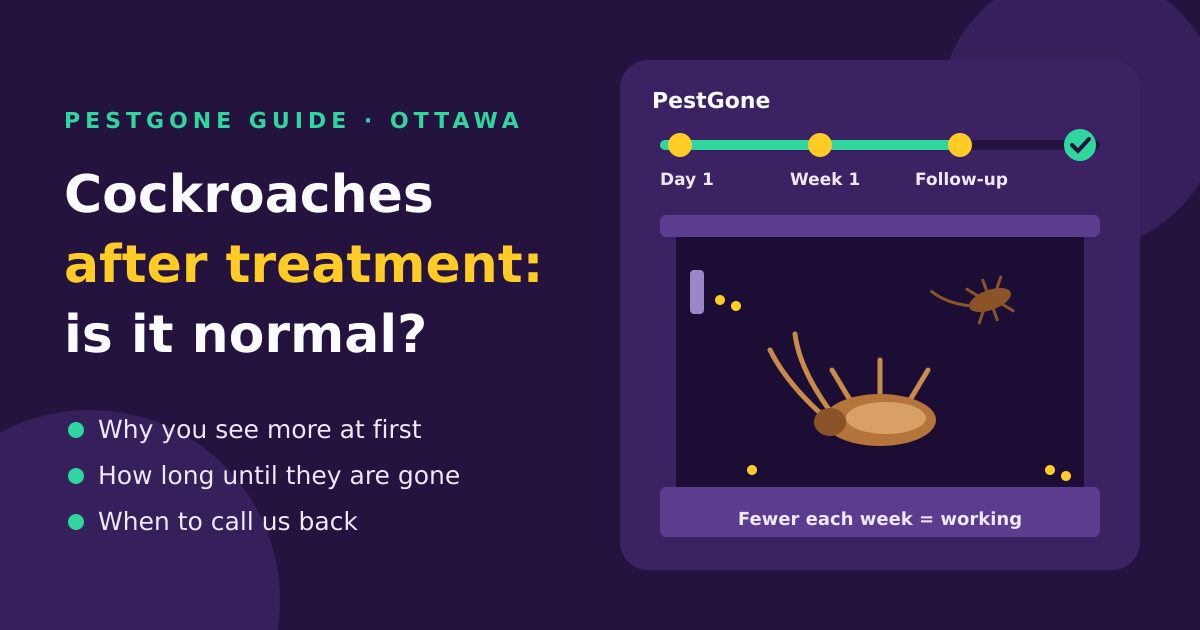
Yes. Seeing some cockroaches for the first one to two weeks after treatment is normal. Gel bait works over several days, roaches that have fed on it often wander into the open, and nymphs keep hatching from egg cases the treatment cannot reach. Activity should drop clearly within two to three weeks, helped by the follow-up visit.
What matters is the trend, not a single sighting. Fewer roaches each week, more of them slow or dead, and fewer adults are good signs. Lots of fast, healthy roaches of every size three weeks or more after the first visit is not normal, and the section on when to worry, further down, explains what to do.
Why am I seeing more cockroaches after treatment?
Seeing more cockroaches for a few days after treatment is common, and it usually means the treatment is reaching them. Before the visit, most roaches stay hidden deep behind appliances, inside hinges and in wall gaps, so you only saw a small part of the population. Treatment disturbs those hiding places.
- Affected roaches act strangely. A roach that has eaten gel bait slows down, loses coordination and often comes out into the open, even in daylight, before it dies.
- A spray flushes them out. Where a targeted spray was used on cracks and voids, roaches leave those spots and cross open areas, where you see them.
- Hiding places were moved. Emptying cabinets and pulling out appliances for the visit shifts roaches around for a few days.
A short spike in the first few days, with many roaches looking sluggish, is not the same as the infestation growing. Keep a simple note of where and when you see them so you can tell which way it is going.
How long does it take for cockroaches to die after treatment?
Most cockroaches die within a few days of contacting the treatment, but not instantly, and that delay is deliberate. Gel bait is slow-acting so that roaches have time to carry it back to the hiding spot, where other roaches are exposed to it too. A fast-killing product would stop at the roach that ate it.
A targeted spray acts faster on the roaches it touches and stays active on the treated cracks and surfaces for a while, so roaches crossing those spots later are affected as well. Either way, you will keep finding dying and dead roaches for some days after the visit. That is the treatment doing its job.
How long until cockroaches are gone after treatment?
Most Ottawa homes see a big drop in cockroach activity within two to three weeks of the first visit. Heavier infestations can take longer and may need an extra follow-up visit. A typical timeline looks like this:
- First few days: more roaches out in the open, many slow or dying. This is normal.
- End of week one: fewer adults. You may start seeing small nymphs from egg cases hatching.
- About two weeks: the follow-up visit checks activity and tops up the treatment to catch the roaches that hatched after the first visit.
- Two to three weeks: a clear drop for most homes. Occasional sightings can continue for a while as the last nymphs come into contact with the treatment.
- Heavy infestations or shared buildings: an extra follow-up may be needed, especially if neighbouring units were not treated.
How fast it goes depends on how many roaches there were, how well the kitchen was prepared, and whether roaches are coming in from next door. Our guide to preparing for cockroach treatment covers the preparation side, which also matters for the follow-up visit.
Why are baby cockroaches showing up after treatment?
Baby cockroaches after treatment usually come from egg cases that were already in your home before the visit. A German cockroach egg case has a tough shell, and the eggs inside are protected from bait and most sprays, so nymphs can keep hatching for a few weeks after the first visit.
That is exactly why cockroach treatment includes a follow-up about two weeks later, and why light infestations get a growth regulator along with the gel bait: it stops young roaches from growing into adults that breed. Newly hatched nymphs also feed on bait that is still in place.
If you were finding nymphs before treatment too, our guide on what baby cockroaches in the kitchen mean explains where they come from. After treatment, the thing to watch is whether the number of nymphs is falling week by week.
Dead or dying cockroaches after treatment: what to do
Finding dead cockroaches, or roaches lying on their backs and moving slowly, is a good sign in the first weeks after treatment. Clean them up as you find them so you can tell new activity from old:
- Sweep or vacuum dead roaches from floors and counters, and empty the vacuum or dustpan into a sealed bag that goes into the outdoor garbage.
- Wear gloves if you pick them up by hand, and wash your hands afterwards.
- Wipe counters and the stovetop with your usual cleaner before preparing food.
- Do not clean inside the cracks, cabinet hinges and corners where the technician placed gel. Those small dots need to stay where they are.
- Wash dishes and utensils that were left out before using them.
What should I avoid after cockroach treatment?
The most important thing is not to spray anything of your own. Many store-bought insecticides repel cockroaches, so they scatter roaches away from the bait, and spray landing on or near the gel can stop roaches from eating it. A few other habits quietly undo treatment too:
- Do not use bug bombs or foggers. They do not reach roaches inside appliances and walls, and they can push them into other rooms or neighbouring units.
- Do not wipe away or wash the bait spots, even if you can see them. Ask your technician which spots to leave alone.
- Do not leave food, dishes or pet food out overnight. Roaches that find easy food are less likely to eat the bait.
- Do not leave the sink, dish rack or tub wet at night. Cockroaches need water, and drying things off makes the bait more attractive.
- Do not bring cardboard back into the kitchen, and do not store paper bags under the sink. Egg cases and roaches hide in it.
- Do not seal every crack yet. Your technician will tell you when it makes sense to seal gaps under the sink and behind cabinets.
Keep cleaning as normal: counters, floors and the stovetop every day, food in sealed containers, and garbage taken out. That keeps the competition for the bait low.
When should I worry that cockroach treatment is not working?
Call us back if you are still seeing many live, fast-moving cockroaches three weeks after the first visit, or if activity is going up instead of down after the follow-up. A few stragglers are normal; a steady or growing number is not. Other warning signs:
- Adults and nymphs of every size still out most nights after the follow-up visit.
- Roaches turning up in rooms where you never saw them before, such as bedrooms or a hall closet.
- Fresh droppings, like ground pepper, reappearing in cabinets you have cleaned.
- New egg cases in hinges or behind appliances weeks after treatment.
- Activity that stopped for a while and then came back.
None of these mean you are stuck. They usually point to a hiding spot that was missed, roaches coming in from a neighbouring unit, or preparation that was hard to finish. Your technician can adjust the plan, for example switching from gel to a targeted spray for heavier activity. Use our contact page to tell us what you are seeing, with dates if you have them.
Why do cockroaches come back after treatment?
When cockroaches come back after treatment, it is usually because new roaches arrived, not because the treatment stopped working. The common causes in Ottawa homes are:
- Neighbouring units. In apartments and condos, roaches move between units through plumbing chases and wall gaps. If only one unit is treated, roaches from next door can move back in. Our guide to cockroaches in apartments and condos explains why building-wide treatment works best.
- Things brought into the home. Cardboard boxes, grocery bags, second-hand appliances and furniture can carry roaches or egg cases into a treated home.
- Food and water left out. A dripping tap or crumbs behind the stove make the kitchen attractive again.
- Repellent sprays. Spraying store-bought insecticide can push surviving roaches into wall voids, where they wait and then return.
If you see a single adult months later and nothing else, it may be a hitchhiker rather than a new infestation. Our guide on what to do if you saw one cockroach helps you tell the difference.
What do the follow-up visit and six-month guarantee cover?
Every cockroach treatment we do includes a follow-up visit about two weeks after the first one, plus a six-month guarantee: if activity returns, we re-treat for free. The follow-up is not optional extra work. It is planned from the start, because egg cases hatch after the first visit.
At the follow-up, your technician checks the places treated the first time, looks at where you have still been seeing roaches, and tops up the treatment. If activity is heavier than expected, they will tell you what else is needed, whether that is an extra follow-up or a talk with your landlord or condo board about neighbouring units. Bring your notes of where and when you saw roaches. They make the visit far more useful.
We treat homes and apartments across the city, from high-rises around South Keys and Heron Park to older houses in Elmvale Acres in Alta Vista, townhouses in Centrepointe and Bayshore in Nepean, and family homes in Convent Glen and Fallingbrook in Orléans.
Quick answers about cockroaches after treatment
Why are cockroaches coming out during the day after treatment?
Roaches that have eaten bait or crossed a treated surface lose coordination and often come into the open before they die. It usually settles down within days.
Can I clean my kitchen after cockroach treatment?
Yes. Clean counters, floors and the stovetop as normal, but leave the cracks, hinges and corners where gel was placed alone.
Should I spray the roaches I still see?
No. Store-bought sprays can scatter roaches away from the bait. Squash, sweep or vacuum the ones you see instead.
Do I need to leave home after a follow-up visit?
Not for gel. If a spray is used, keep people and pets out of treated areas until it has dried, at least two hours; your technician confirms the time.
Is one cockroach a month after treatment a problem?
Usually not. Note where you saw it and watch for more. If you keep seeing them, contact us under the six-month guarantee.
How much does cockroach treatment cost in Ottawa?
Our cockroach control is one flat price of $299 plus HST for apartments, condos and houses. That price already includes the follow-up visit about two weeks later and the six-month guarantee, so a follow-up or a re-treatment under the guarantee does not cost extra. Whole buildings are quoted separately. All our prices are on the pricing page.
Book cockroach treatment online
If you have not had a treatment yet, or you were treated elsewhere and still have roaches, pick a day and time window on our booking page and we will email you to confirm. Cockroach control includes an inspection of the kitchen, bathrooms, appliances and plumbing gaps to find where roaches hide, gel bait and growth regulator for light activity or a targeted spray for heavier infestations, treatment of appliance areas, cabinet hinges, cracks and voids, a preparation checklist sent before your visit, a follow-up visit about two weeks later, and a six-month guarantee: if activity returns, we re-treat for free.
Already a customer? Tell us what you are seeing through the contact page. Other common questions are answered in our pest control FAQ.
Book online See cockroach control ($299 + HST)
Not sure what you're dealing with? Call 343-341-2815 and describe it. We'll tell you what it is and what it costs.
Keep reading
Sources
- Cockroaches, Health Canada
- Pest infestations: tenants' rights and responsibilities, City of Ottawa
General information for homeowners. Every home is different; your technician will confirm what applies to yours.
Let's make them gone.