Saw one cockroach? What it means and what to do
You switch on the kitchen light and a cockroach runs under the stove. Now you are wondering whether it was a one-off or the first sign of many more. Here is how to tell if one cockroach means an infestation, how to check your home tonight, and what to do next.
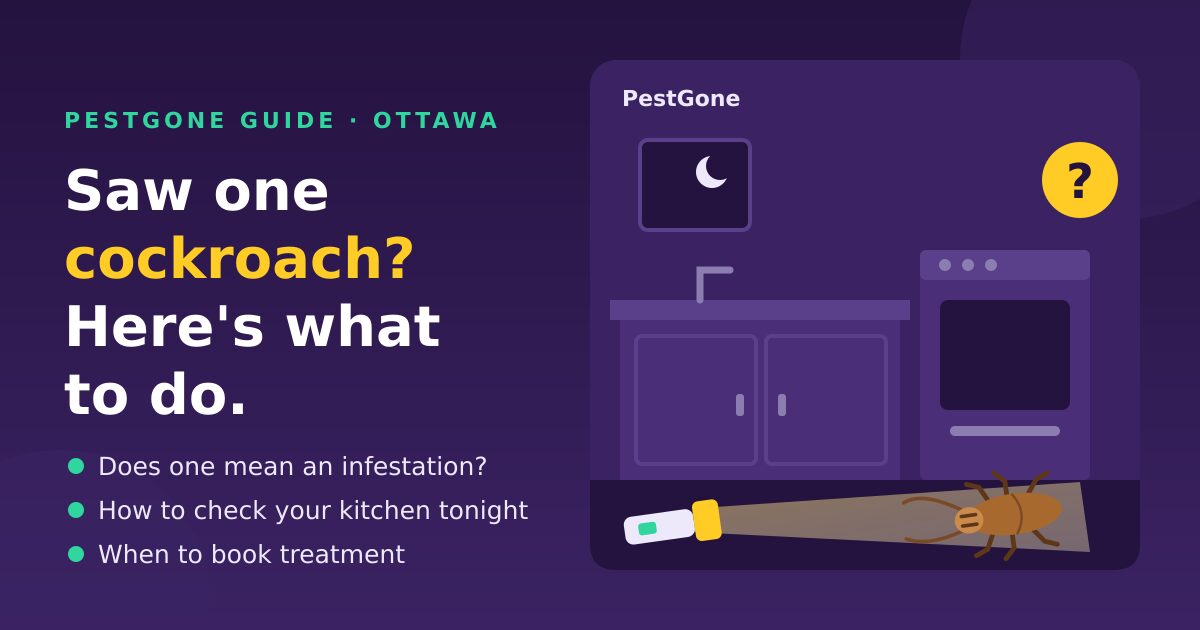
Does one cockroach mean an infestation?
Not always, but it is a warning you should not ignore. A single cockroach can be a hitchhiker that came in on a box, a bag or a second-hand appliance. More often, though, the one you see is not the only one. Cockroaches hide during the day in tight, dark gaps and come out at night to feed, so for every roach you notice there are usually others you do not.
In Ottawa homes, the cockroach you find indoors is most likely a German cockroach. German cockroaches live indoors year-round, breed quickly, and spread through kitchens and bathrooms and between units in apartment and condo buildings. That is why one sighting is worth taking seriously: a small problem caught early is much easier to deal with than one that has had months to grow.
The good news is that you can find out fairly quickly. A careful look with a flashlight after dark, and a check for droppings and egg cases, will usually tell you whether you have a lone visitor or the start of an infestation.
Where did the cockroach come from?
Cockroaches do not appear from nowhere. The most common ways they get into a home are:
- Cardboard boxes: deliveries, moving boxes and boxes from storage lockers or grocery stores. Roaches and their egg cases hide in the corrugated layers.
- Grocery and shopping bags, especially reusable bags kept in a car or a cupboard.
- Second-hand appliances and furniture: microwaves, toasters, coffee makers, fridges and kitchen tables are common carriers.
- Luggage and bags after travel, or after a stay somewhere with roaches.
- A neighbouring unit. In apartment and condo buildings, cockroaches move between units through plumbing, wall voids and the gaps where pipes pass through walls and floors.
- Drains and pipe openings under sinks and behind appliances, where gaps around the pipes are not sealed.
In summer, homes near wooded areas sometimes see a wood cockroach that wandered in from outside. These usually do not settle indoors. In late fall and winter, though, a cockroach in your kitchen is very unlikely to have walked in from outdoors, so it is worth checking for more.
Is it really a cockroach?
Before you worry, make sure of what you saw. Adult German cockroaches are light brown to tan, a little over a centimetre long, with two dark stripes running down the area just behind the head. They have long antennae, and they run fast when the light comes on.
Young cockroaches (nymphs) are smaller, darker, and have no wings. Seeing small, dark roaches is a strong sign that they are breeding in your home, not just passing through.
A few other insects get mistaken for cockroaches. Some beetles are dark, oval and shiny, but they move slowly and have a hard shell that meets in a straight line down the back. Bed bugs are much smaller, flat and reddish-brown, and are found around beds and couches rather than kitchens. If you find small bugs near where you sleep, our guide to the signs of bed bugs will help you tell. If you can, catch the insect in a clear container or take a clear photo. It makes identification easy.
How to check for more cockroaches tonight
Cockroaches are easiest to find at night. Wait until the house has been dark and quiet for an hour or two, then take a flashlight and check:
- Behind and under the fridge and stove, including the warm area near the motor at the back of the fridge.
- Under the kitchen sink, especially where pipes come through the wall or the cabinet floor.
- Inside cabinet hinges and corners, and the gaps where cabinets meet the wall.
- Around the dishwasher, microwave, toaster and coffee maker. Small appliances are warm and often have crumbs inside.
- Bathroom vanities, behind the toilet and around the tub, where it is warm and damp.
- Inside the pantry, recycling bin, and any stack of cardboard or paper bags.
- Along baseboards and around electrical outlets on kitchen and bathroom walls.
Switch the light on quickly and watch. If several roaches scatter, or you see small dark nymphs, you have more than one.
Signs of a cockroach infestation
Even if you do not see another live roach, these signs tell you they are living in your home:
- Droppings that look like ground black pepper or coffee grounds, in cabinet corners, drawers, hinges and on top of door frames. Larger droppings can look like small dark specks or smears. They are much smaller than mouse droppings, which are rice-shaped (our guide to the signs of mice shows the difference).
- Egg cases: small, light brown, capsule-shaped cases in dark gaps behind appliances or in cabinet hinges.
- Shed skins: pale, papery outlines of a cockroach, left behind as the young ones grow.
- Small dark smear marks along cabinet edges and where roaches travel.
- A musty, oily smell in cupboards or under the sink, which gets stronger as the infestation grows.
- Cockroaches seen in more than one room, or on different nights.
Seeing a cockroach in the daytime
Cockroaches avoid light and prefer to stay hidden during the day. A roach that is out in the open in daylight is often a sign that its hiding places are crowded, which usually points to a larger population, or that something has disturbed it, such as cleaning, moving an appliance or a treatment in a neighbouring unit.
One daytime sighting is not proof of a heavy infestation, but if you see roaches in the daytime more than once, it is time to book treatment rather than wait and watch.
What to do right now if you saw a cockroach
Whether it was one roach or you have already found more, these steps help straight away and make treatment work better:
- Do not leave food, dishes or pet food out overnight. Wipe the counters and stovetop, and sweep the floor before bed.
- Store pantry food in hard containers with tight lids, including cereal, pasta, rice, flour and pet food.
- Fix dripping taps and leaks under sinks, and dry the sink and tub at night. Cockroaches need water more than food.
- Take out garbage and recycling often, and keep bins closed.
- Get rid of cardboard: flatten and recycle boxes, and do not store paper bags under the sink.
- Check any boxes, bags or second-hand items that came into the home recently, outside or in the bathtub where a roach cannot escape easily.
- Write down where and when you saw roaches. It tells the technician where to focus.
- If you live in an apartment or condo, tell your landlord, property manager or condo board.
What not to do
- Do not set off bug bombs or foggers. They push cockroaches deeper into walls and into neighbouring rooms and units, and make the problem harder to treat.
- Do not spray store-bought insecticide around the kitchen before treatment. Many sprays repel roaches, which scatters them, and spraying near gel bait can stop roaches from feeding on it.
- Do not move boxes, small appliances or furniture from the kitchen into other rooms. Roaches can travel with them.
- Do not ignore one sighting and hope it was the only one. German cockroaches breed quickly, and waiting usually means more roaches, not fewer.
- Do not leave a heavy cleaning job until after treatment. A clean, uncluttered kitchen helps the treatment work, but follow your technician's instructions on what to leave alone after the visit.
Cockroaches in Ottawa apartments, condos and rentals
Most cockroach problems in Ottawa start in apartment and condo buildings, where roaches can move between units through plumbing and wall voids. A roach in your kitchen may have come from a unit above, below or beside you, and treating your unit alone may not stop new ones arriving. Our guide to cockroaches in apartments and condos explains why that happens and what helps.
If you rent, tell your landlord or property manager as soon as you see a roach. In Ottawa, treating pests in a rental unit is generally the landlord's responsibility, and tenants are expected to prepare the unit. In a building, the landlord or condo board may also arrange for neighbouring units to be checked, which gives the best result. Whether you are in a high-rise near South Keys, an apartment in Alta Vista or a townhouse in Nepean, acting early keeps the problem small.
How to keep cockroaches from coming back
After treatment, a few habits make your home much less inviting to roaches:
- Keep the kitchen dry at night: no standing water in the sink, and fix slow leaks promptly.
- Clean behind and under the stove and fridge every few months. Grease and crumbs build up there.
- Keep cardboard out of the kitchen and storage areas, and unpack deliveries promptly.
- Seal gaps around pipes under sinks and behind appliances, and where cabinets meet the wall.
- Check second-hand appliances and furniture carefully before they come inside.
- Do not leave pet food out overnight.
Many of the same habits also help keep ants away. Our guide to ants in the house covers food and moisture in more detail.
When to call a cockroach exterminator
Book treatment if you see more than one cockroach, see small dark nymphs, find droppings or egg cases, see roaches in the daytime, or keep seeing them after a week or two of cleaning up. Any of these means roaches are living and breeding in your home, and store-bought products are unlikely to reach the places they hide.
Professional cockroach control starts with an inspection to find where they hide, then a treatment chosen for the amount of activity: gel bait and a growth regulator for light activity, which stops roaches multiplying, or a targeted spray for heavier infestations.
Quick answers about seeing a cockroach
- Can one cockroach start an infestation? A female German cockroach carrying an egg case can. That is why even one sighting is worth checking.
- Do cockroaches come out in winter in Ottawa? German cockroaches live indoors year-round, so you can see them in any season.
- Does a clean home get cockroaches? Yes. Roaches can arrive in boxes, bags and appliances, or from a neighbouring unit, even in a very clean home. Cleaning helps treatment work, but it does not stop roaches arriving.
- Do I need to leave my home for treatment? Gel treatment usually needs no time out. After a spray treatment, keep people and pets out of treated areas until it has dried. Health Canada's minimum is two hours, and your technician confirms the time on the day.
- How long until the roaches are gone? Most homes see a big drop in two to three weeks. Heavy infestations may need an extra follow-up.
How much does cockroach treatment cost in Ottawa?
Our cockroach treatment is one flat price of $299 plus HST for apartments, condos and houses, including a follow-up visit about two weeks later and our six-month guarantee. Whole buildings are quoted separately. You can compare it with our other services on the pricing page, and our pest control FAQ answers common questions about visits and guarantees.
Book cockroach treatment online
Pick a day and time window on our booking page and we will email you to confirm. Cockroach control includes an inspection of the kitchen, bathrooms, appliances and plumbing gaps to find where roaches hide, gel bait and growth regulator for light activity or a targeted spray for heavier infestations, treatment of appliance areas, cabinet hinges, cracks and voids, a preparation checklist sent before your visit, a follow-up visit about two weeks later, and a six-month guarantee: if activity returns, we re-treat for free.
Want to ask something first? Contact us, or book cockroach treatment online now.
Book online See cockroach control ($299 + HST)
Keep reading
General information for homeowners. Every home is different; your technician will confirm what applies to yours.
Let's make them gone.