Baby cockroaches in the kitchen: what it means and what to do
Small, dark bugs running along the counter or out of a cabinet hinge are one of the most upsetting things to find in a kitchen. If they are baby cockroaches, they are telling you something important about what is happening behind your walls and appliances. Here is how to recognise them, what they mean, what to do tonight, and how to get rid of them for good.
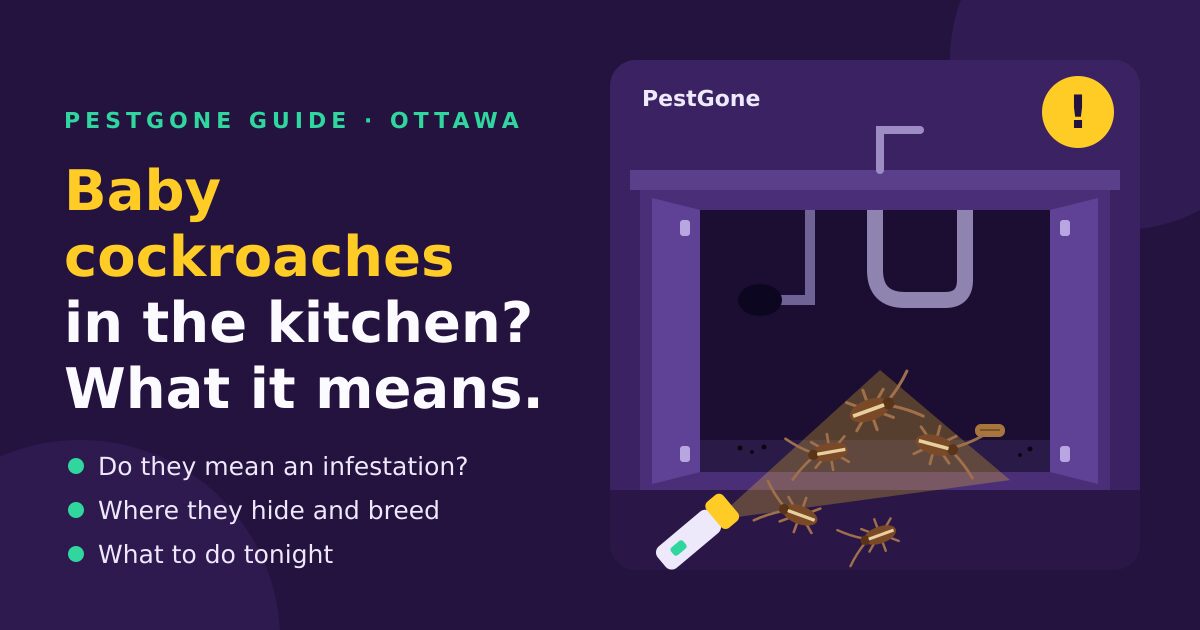
Do baby cockroaches in the kitchen mean an infestation?
Yes, in almost every case. Baby cockroaches (called nymphs) hatch from egg cases laid inside your home. Unlike an adult roach, which can arrive on its own in a box or a bag, nymphs usually mean cockroaches are already living and breeding nearby: in your kitchen, inside an appliance, or in a wall or unit right next to yours.
That is the difference between this and seeing a single adult. One adult cockroach can be a hitchhiker, and our guide on what to do if you saw one cockroach covers that situation. Baby cockroaches are a sign the roaches have settled in, found food, water and shelter, and started a new generation.
The upside is that a young infestation, caught when you first notice nymphs, is much easier to treat than one that has been growing for months. Acting now, rather than waiting to see whether they go away, is what keeps the problem small. They do not go away on their own.
What do baby cockroaches look like?
Indoors in Ottawa, the cockroach in your kitchen is almost always the German cockroach, and its nymphs are what most people find. Here is how to recognise them:
- Small: the youngest are only a few millimetres long, about the size of a grain of rice or smaller. They grow through several stages, getting bigger each time they shed their skin.
- Dark brown to nearly black, darker than the light-brown adults, often with a pale stripe or band running down the middle of the back.
- No wings. Wings only appear on adults, so a small, wingless, fast-running bug is a strong clue.
- Long antennae and six legs, with the same flat, oval body shape as an adult.
- Fast and shy of light: they run for cracks and hinges as soon as the light comes on.
- Pale, almost white nymphs are ones that have just shed their skin. They darken within hours. Seeing one does not mean you have an albino cockroach.
If the small bugs you are finding are near your bed rather than the kitchen, they may be something else. Our guide to the signs of bed bugs shows the difference. Tiny insects marching in a line along the counter are more likely ants: see ants in the house. If you can, trap one under a clear glass or take a sharp photo. It makes identification easy for your technician.
Why am I only seeing baby cockroaches?
This is one of the most common questions people ask, and it usually has a simple answer: the adults are there, you just are not seeing them.
Adult German cockroaches spend most of their time hidden deep in warm, tight spaces such as the back of the fridge, the inside of the stove, the dishwasher, or the gap behind a cabinet. Nymphs are smaller and more numerous, they wander further looking for food, and they can squeeze through gaps you cannot see, so they are often the first ones to show up on the counter or the backsplash.
Seeing mostly nymphs can also mean an egg case has hatched recently. A female German cockroach carries her egg case until it is nearly ready to hatch, then drops it in a protected spot, and dozens of nymphs can come out of a single case. A burst of small roaches in one area, such as inside a cupboard or under the sink, often points to a hatch nearby.
Either way, if you see nymphs, assume there are adults breeding close by, and treat it as an infestation rather than a passing visitor.
Where are the baby cockroaches coming from?
Nymphs stay close to where they hatched, so where you see them is a clue to where the colony lives. The usual sources in an Ottawa kitchen are:
- Behind and under the fridge, especially the warm area around the motor and drip pan.
- Inside or behind the stove, the dishwasher and the microwave, where it is warm and crumbs collect.
- Small appliances: coffee makers, toasters and kettles. Roaches can live inside them, which is also how they move between homes on second-hand items.
- Under the kitchen sink, around pipe openings in the cabinet floor and back wall.
- Cabinet hinges, corners and the gap where cabinets meet the wall or the backsplash.
- Cardboard: stored boxes, flattened recycling and paper bags kept under the sink or on top of the fridge.
- A neighbouring unit. In apartments, condos and stacked townhouses, roaches travel through plumbing chases, wall voids and the gaps around pipes, so nymphs can appear in your kitchen even when the colony started next door.
Signs of a cockroach infestation to check for
Along with the nymphs themselves, look for these signs. They tell you how established the problem is and help your technician plan treatment:
- Droppings like ground black pepper or coffee grounds in cabinet corners, drawer runners, hinges and on top of door frames. They are much smaller than mouse droppings, which are rice-shaped (our guide to the signs of mice shows the difference).
- Egg cases: small, tan to brown, capsule-shaped cases in dark gaps, sometimes empty and split open after hatching.
- Shed skins: pale, papery outlines left behind as nymphs grow.
- Dark smear marks along the edges of cabinets and where roaches travel.
- A musty, oily smell in cupboards or under the sink that gets stronger as numbers grow.
- Roaches of different sizes, from tiny nymphs to adults, which means several generations are living in the same place.
- Roaches out in the open in the daytime, often a sign that hiding places are crowded.
What to do tonight if you find baby cockroaches
You cannot get rid of a breeding infestation with cleaning alone, but these steps cut off food and water, slow the roaches down, and make treatment work better:
- Clean up all food and crumbs before bed: wipe the counters and stovetop, sweep the floor, and wash dishes rather than leaving them in the sink.
- Put pantry food in hard containers with tight lids, including cereal, pasta, rice, flour, sugar, snacks and pet food.
- Dry the sink, the dish rack and the tub at night, and fix dripping taps. Cockroaches need water even more than food.
- Take out garbage and recycling, and keep bins closed. Do not keep cardboard or paper bags under the sink.
- Do not leave pet food or water bowls out overnight if you can avoid it.
- Take a flashlight around the kitchen and bathroom an hour or two after dark and note where you see roaches. It tells your technician exactly where to focus.
- Do not move small appliances, boxes or furniture out of the kitchen into other rooms. Nymphs can travel with them.
- If you live in an apartment or condo, tell your landlord, property manager or condo board now.
- Book cockroach treatment rather than waiting to see whether it gets better. Every week of waiting allows more egg cases to hatch.
What not to do: mistakes that spread baby cockroaches
- Do not set off bug bombs or foggers. They do not reach roaches hidden inside appliances and walls, and they tend to push them deeper into wall voids and into other rooms and neighbouring units.
- Do not spray store-bought insecticide around the kitchen. Many sprays repel roaches, which scatters them, and spray near the places a technician will put gel bait can stop roaches from feeding on it.
- Do not move the kitchen into another room or carry appliances to a friend's place. That is how roaches spread to a new home.
- Do not throw out your appliances in a panic. A technician can tell you whether an appliance can be treated or is too heavily infested to keep.
- Do not seal every crack before treatment. Your technician may want to treat those gaps first, then advise what to seal afterwards.
- Do not wait for the problem to settle down. German cockroaches breed quickly indoors year-round, and a small population grows into a large one if it is left alone.
Are baby cockroaches dangerous?
Baby cockroaches do not bite people in any normal situation, and they do not sting. The concern is hygiene and air quality. Cockroaches walk through drains, garbage and food, and can contaminate counters, dishes and open food. Their droppings, shed skins and saliva can also trigger allergies and asthma symptoms in some people, which is one reason a long-running infestation is worth dealing with quickly.
Practical steps help: keep food covered, wash dishes and utensils before use if they have been sitting out, and wipe counters before preparing food. If anyone in the home has asthma or allergy symptoms that get worse, talk to a doctor or pharmacist.
Baby cockroaches in Ottawa apartments, condos and rentals
Most cockroach problems in Ottawa begin in multi-unit buildings: high-rises, low-rise apartments, condos and stacked townhouses. Roaches move between units through shared plumbing and walls, so nymphs in your kitchen may come from a unit above, below or beside you. Treating your unit alone helps, but the best results come when the neighbouring units are checked and treated too. Our guide to cockroaches in apartments and condos explains how that works.
If you rent, tell your landlord or property manager as soon as you find baby cockroaches. In Ottawa, treating pests in a rental unit is generally the landlord's responsibility, and tenants are expected to prepare the unit.
We treat apartments, condos and houses across the city, from towers near South Keys and Alta Vista to older homes and low-rises in Westboro and townhouses in Nepean.
How professional cockroach treatment works
Store-bought products rarely reach the places where nymphs hatch and hide. Professional cockroach control is built around finding those places first and choosing a treatment that matches the amount of activity:
- Inspect: your technician checks the kitchen, bathrooms, appliances and plumbing gaps to find where roaches are hiding and breeding.
- Choose: gel bait and a growth regulator for light activity, which stops roaches multiplying, or a targeted spray for heavier infestations.
- Treat: gel goes in tiny dots where roaches feed, so they carry it back to the hiding spot. A targeted spray goes on cracks and hiding areas when there are many. Appliance areas, cabinet hinges, cracks and voids are treated.
- Follow up: a second visit about two weeks later checks activity and tops up the treatment, to catch nymphs that hatched after the first visit.
Gel treatment usually needs no time out of your home. After a spray treatment, keep people and pets out of treated areas until it has dried. Health Canada's minimum is two hours, and your technician confirms the time on the day. You will get a preparation checklist before the visit, so you know what to clear out of cabinets.
How to stop baby cockroaches coming back
After treatment, a few habits make your kitchen far less welcoming:
- Keep the kitchen dry overnight and fix slow leaks under sinks and behind the dishwasher.
- Clean behind and under the stove and fridge every few months, where grease and crumbs build up.
- Keep cardboard out of the kitchen and unpack deliveries promptly.
- Seal gaps around pipes under the sink and where cabinets meet the wall, once your technician says it is time.
- Check second-hand appliances, furniture and boxes carefully before they come inside.
- Tell your building manager if you see roaches again, so neighbouring units can be checked.
Quick answers about baby cockroaches
- Can one baby cockroach mean an infestation? Usually, yes. Nymphs hatch indoors, so one is a sign that adults are breeding close by.
- Do baby cockroaches fly? No. Only adults have wings, and German cockroaches rarely fly even as adults.
- Can baby cockroaches come from the drain? Roaches use the gaps around drain pipes as highways, but they are not usually coming up through a working drain trap. The gaps under the sink are the more likely route.
- Will a clean kitchen stop them? Cleaning helps treatment work, but roaches can arrive in boxes, appliances or from a neighbour even in a spotless home.
- How long until they are gone? Most homes see a big drop in two to three weeks. Heavy infestations may need an extra follow-up.
- Do cockroaches go away in winter in Ottawa? No. German cockroaches live indoors, and heated homes and buildings keep them warm all year. Holiday cooking and stacks of delivery boxes can help a small problem grow, so deal with it before guests arrive.
How much does cockroach treatment cost in Ottawa?
Our cockroach treatment is one flat price of $299 plus HST for apartments, condos and houses, including the follow-up visit about two weeks later and our six-month guarantee. Whole buildings are quoted separately. You can compare it with our other services on the pricing page.
Book cockroach treatment online
Pick a day and time window on our booking page and we will email you to confirm. Cockroach control includes an inspection of the kitchen, bathrooms, appliances and plumbing gaps to find where roaches hide, gel bait and growth regulator for light activity or a targeted spray for heavier infestations, treatment of appliance areas, cabinet hinges, cracks and voids, a preparation checklist sent before your visit, a follow-up visit about two weeks later, and a six-month guarantee: if activity returns, we re-treat for free.
Have a question first? Read our pest control FAQ or contact us.
Book online See cockroach control ($299 + HST)
Keep reading
Sources
- Cockroaches, Health Canada
- Pest infestations: tenants' rights and responsibilities, City of Ottawa
General information for homeowners. Every home is different; your technician will confirm what applies to yours.
Let's make them gone.