Bed bugs in your apartment: what to do
Finding bed bugs in an apartment or condo is stressful, and it raises questions a house owner never has to think about: do I tell my landlord, who pays, did they come from next door, and will they spread to my neighbours? This guide walks through what to do first, how to deal with your landlord or condo board, how to stop bed bugs spreading in the building, and how treatment works.
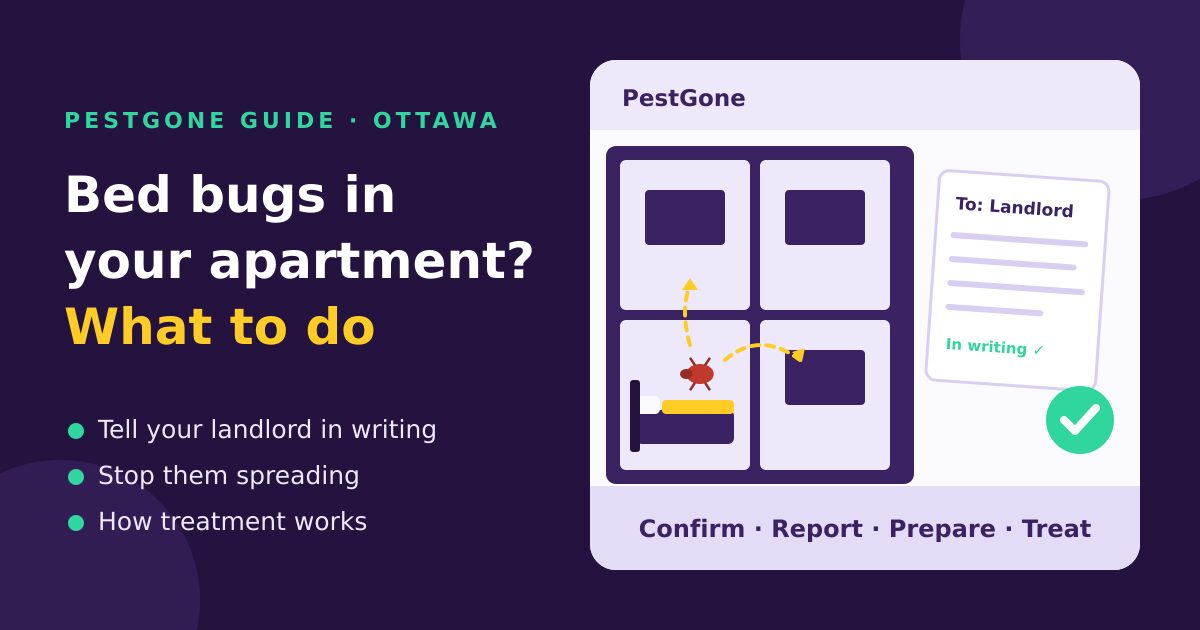
Bed bugs in your apartment: what to do first
If you think you have bed bugs in your apartment, do four things: confirm it is bed bugs, tell your landlord or property manager in writing, keep sleeping in your own bed, and do not move furniture or belongings out of the unit. Then get a licensed professional to inspect and treat, ideally with the units next to, above and below yours checked too.
Bed bugs are not a sign of a dirty home. They travel in luggage, bags, clothing and furniture, and in apartment buildings they also move between units. The sooner you act, the smaller the problem stays, for you and for the building. Our bed bug treatment is one flat price for your unit, with a follow-up treatment included.
How to confirm it is bed bugs
Bites alone do not prove bed bugs. People react very differently, and bites from mosquitoes, fleas and other insects can look the same; our guide to bed bug bites vs mosquito bites explains why. What confirms bed bugs is finding the bugs or what they leave behind:
- Live bugs: flat, oval and reddish-brown, about the size of an apple seed, in mattress seams, the box spring, the bed frame or the couch.
- Dark spots like dots from a felt-tip marker on mattress seams, sheets and the box spring.
- Pale, empty shed skins and tiny white eggs in seams, cracks and screw holes.
- Small rust-coloured smears on sheets or pillowcases.
Our guide to the signs of bed bugs shows how to check a bedroom step by step. If you catch a bug, put it in a sealed bag or a jar, or take a clear photo. It helps your landlord and your technician confirm what it is.
Should I tell my landlord about bed bugs?
Yes, and as soon as possible. Telling your landlord early is the single most useful thing a tenant can do: it gets treatment started sooner, and it lets the building check neighbouring units before bed bugs spread further. Hiding a bed bug problem rarely works in an apartment, because the bugs keep moving.
Tell your landlord or property manager in writing, by email or a dated letter, and keep a copy. Include:
- The date you first noticed signs and what you found (bugs, spots, skins, bites).
- Which rooms and furniture are affected.
- Photos, and the bug in a sealed bag if you caught one.
- Any recent travel, visitors or second-hand furniture, if you know of them. This is not about blame; it helps the technician understand how they arrived.
- Your availability for an inspection.
Who pays for bed bug treatment in an Ottawa apartment?
In Ottawa, treating pests in a rental unit is generally the landlord's responsibility. Under the City of Ottawa's rental housing rules, landlords are responsible for keeping units free of pests, must give tenants the treatment plan before treating, and must re-inspect within 15 to 30 days and treat again if needed. Tenants are expected to prepare the unit and follow the plan.
If you have reported bed bugs in writing and nothing is happening, the City of Ottawa's page on pest infestations explains what tenants can do next, including contacting the City through 3-1-1 about property standards. Disputes between tenants and landlords in Ontario go to the Landlord and Tenant Board. This is general information, not legal advice; for your own situation, check with the City or a tenant legal clinic.
Some tenants decide to book treatment themselves, for example when they want it done quickly. If you do, tell your landlord first and keep them in the loop, so the building can check neighbouring units at the same time.
Can bed bugs spread between apartments?
Yes. Bed bugs do not fly or jump, but they crawl well and they hitch rides. In apartment and condo buildings they move between units in a few common ways:
- Through wall voids, gaps around pipes and wiring, and electrical outlets on shared walls.
- Under doors and along hallways, especially in older buildings.
- On infested furniture or mattresses dragged through hallways and elevators, or left by the garbage room where other people pick them up.
- In laundry carried to and from shared laundry rooms in open baskets.
- On visitors, guests and anyone moving between units.
That is why results last longest when the units beside, above and below yours are inspected at the same time. The same shared-wall problem happens with cockroaches; our guide to cockroaches in apartments and condos explains it in more detail.
What to do while you wait for treatment
There is plenty you can do to keep the problem from growing in the days before the technician arrives:
- Keep sleeping in your own bed. If you move to the couch, a friend's place or another room, the bed bugs follow you and spread to new furniture.
- Wash and dry bedding and clothes from the bedroom, drying them on the highest heat setting the fabric allows, then keep them in sealed plastic bags.
- Vacuum mattress seams, bed frames, couches and baseboards, then empty the vacuum into a sealed bag that goes straight to the outside garbage.
- Pull the bed a little away from the wall and keep bedding off the floor, so bugs cannot climb up easily.
- Reduce clutter around the bed and couch, especially piles of clothes, bags and boxes, without carrying anything out of the unit.
- Start the preparation early. Our bed bug treatment preparation checklist goes room by room, so you are ready on the day.
- If bites are very itchy or look infected, see a pharmacist or doctor.
What not to do in an apartment
- Do not use bug bombs or foggers. They do not reach bed bugs deep in seams and cracks, and they can push them into walls and into neighbouring units, making the building's problem bigger.
- Do not throw out your mattress or furniture before the technician has seen it. Most items can be treated. If something does have to go, wrap it completely in plastic, mark it clearly as having bed bugs, and follow your building's instructions, so nobody else takes it home.
- Do not move belongings to a friend's home, a storage locker or a car to "save" them. That is how bed bugs end up in a second place.
- Do not use rubbing alcohol or other flammable liquids on furniture or mattresses. They are a fire risk and do not solve the problem.
- Do not leave laundry in open baskets in hallways or the laundry room.
- Do not skip the follow-up because you have stopped seeing bugs. Eggs can hatch after the first treatment.
Shared laundry rooms, hallways and moving out
Shared spaces are where bed bugs most easily pass from one unit to another, so a few habits help a lot while you are dealing with them:
- Carry laundry to the laundry room in sealed plastic bags, and put it straight into the machine.
- Use a fresh, clean bag to bring dried laundry back, and fold it in your unit, not on the shared table.
- Dry items on high heat. The dryer, not the washer, does most of the work against bed bugs.
- Keep the door to your unit closed, and do not store belongings in the hallway.
Thinking of moving out to escape bed bugs? Moving before treatment usually takes them with you, in boxes, furniture and clothes, to the new place. It is far better to treat first, finish the follow-up, and then move. If your lease is ending anyway, tell your landlord and ask for treatment to be done before you pack.
Bed bugs in a condo: what owners should do
If you own your condo, you usually arrange and pay for treatment inside your own unit, but you should still tell your property manager or condo board. Many buildings have their own pest control rules and may want to inspect the units around yours, and bed bugs coming in from a neighbour can undo a treatment that only covered one unit.
If you rent out a condo, the landlord's responsibilities above apply to you: your tenant reports to you, and you arrange treatment, with the condo corporation kept informed. Whether you rent or own, whether the building is in South Keys, Nepean or anywhere else we serve, the steps are the same: confirm, report, prepare, treat, follow up.
How bed bug treatment works in an apartment
Treatment in an apartment or condo works the same way as in a house, with a little more attention to shared walls and the edges of the unit:
- Inspection: we confirm it is bed bugs and see how far they have spread, checking beds, frames, headboards, couches, baseboards and the edges of shared walls.
- Preparation: you get a step-by-step preparation guide before the visit. In a small apartment it is mostly laundry, bagging and pulling furniture away from the walls.
- Steam and spray: steam kills bed bugs and eggs on contact in seams, frames and furniture, then a targeted spray reaches the bugs that were hidden in cracks and baseboards.
- Time out: you and your pets stay out of the treated rooms until the spray has dried, usually a few hours. You sleep at home the same night.
- Follow-up: a second treatment about two weeks later catches bed bugs that hatch from eggs after the first visit.
For the full timeline, see how long bed bug treatment takes. Seeing a few bugs for a short time after treatment is normal; it is the follow-up that finishes the job.
How to keep bed bugs from coming back
- Keep mattress and box-spring encasements on after treatment. Your technician can advise whether they make sense for your bed.
- Check hotel beds and luggage racks when you travel, keep suitcases off the floor and bed, and dry clothes on high heat when you get home.
- Inspect second-hand furniture, mattresses and electronics before they come into the building, and never pick up furniture left by the garbage room or curb.
- Keep clutter down around the bed and couch, so you would spot signs early.
- Check mattress seams and the bed frame with a flashlight now and then.
- If you see signs again, tell your landlord or property manager right away. Re-treatment within six months is covered by our guarantee.
How much does bed bug treatment cost in Ottawa?
Our bed bug treatment is one flat price of $399 plus HST for your home, whether it is a studio apartment in Alta Vista or a family house in the suburbs. The price includes the follow-up treatment about two weeks later, so there is no second bill. Whole buildings are quoted separately, which suits landlords and property managers who want several units treated together. Every price is on our pricing page.
Quick answers about bed bugs in apartments
Did the bed bugs come from my neighbour?
Sometimes, but they also come in on luggage, bags and second-hand furniture. The inspection and the building's check of nearby units help work it out.
Should I tell my neighbours?
It helps. Neighbours who know to check their own beds can catch bed bugs early, and buildings get the best results when nearby units are inspected together.
Do I have to leave my apartment for treatment?
Only for a few hours, until the spray in the treated rooms has dried. You can sleep at home that night.
Will bed bugs go away if I leave the unit empty?
No. Bed bugs can survive for months without feeding, and they may move to neighbouring units looking for a host.
Can you come discreetly?
Yes. Mention it in the notes when you book.
My landlord booked a different company. Should I still prepare?
Yes. Preparation is what makes any treatment work, whoever does it.
Book bed bug treatment online
Pick a day and time window on our booking page and we will email you to confirm. Bed bug treatment includes an inspection to confirm bed bugs before treating, steam and spray treatment of beds, frames, headboards, furniture, baseboards and cracks, a step-by-step preparation guide before the visit, a follow-up treatment about two weeks later, advice on mattress and box-spring encasements, a discreet visit on request, and a six-month guarantee: if bed bugs return, we re-treat for free.
If you rent, please tell your landlord before you book. Questions first? Read our pest control FAQ or contact us.
Book online See bed bug treatment ($399 + HST)
Keep reading
Sources
- Bedbugs: how do I get rid of them?, Health Canada
- Bed bugs, Ottawa Public Health
- Pest infestations: tenants' rights and responsibilities, City of Ottawa
General information for homeowners. Every home is different; your technician will confirm what applies to yours.
Let's make them gone.