Bed bug bites vs mosquito bites (and flea bites): how to tell
You woke up with itchy red bumps and you want to know what bit you. Bed bug bites, mosquito bites and flea bites can look alike, but where they are, when they appear, the pattern they make and the time of year all give useful clues. This guide covers how to tell them apart, what else causes similar marks, and what to check in your home before you book anything.
Bed bug bites vs mosquito bites: the short answer
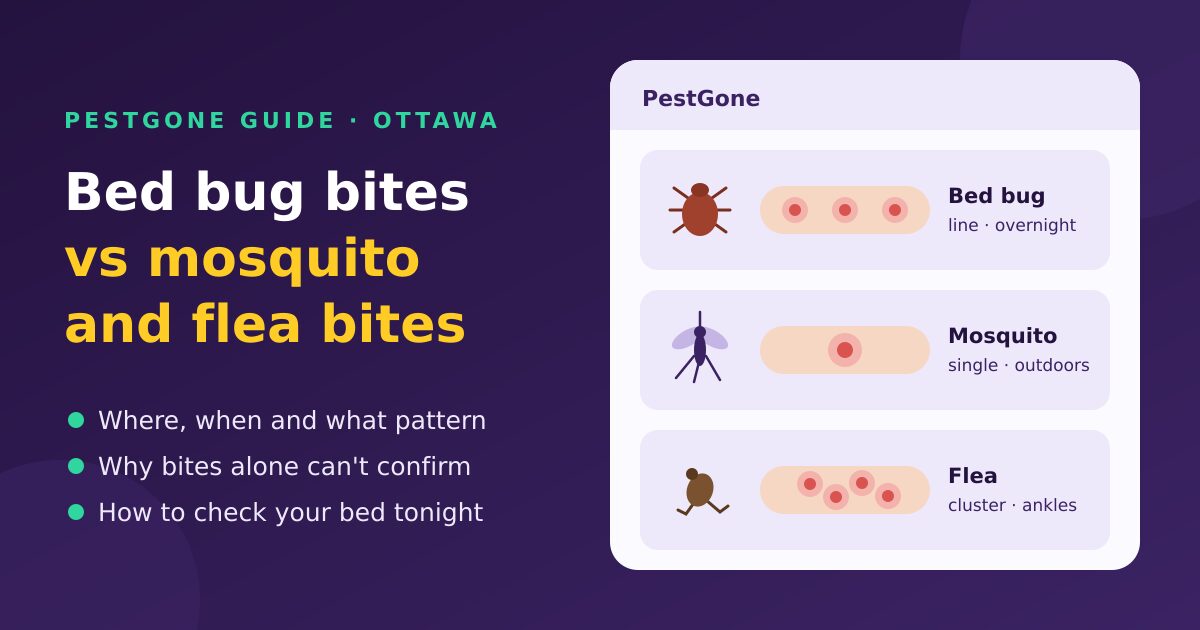
The bites themselves can look almost the same: red, raised and itchy. The clues are around the bites. Mosquito bites tend to be single, scattered and appear within minutes of being outdoors in warm weather. Bed bug bites tend to appear overnight, on skin that was uncovered in bed, sometimes in a line or small cluster, and keep coming back night after night. Flea bites are usually small, very itchy and clustered around the ankles and lower legs, often in a home with pets.
No one can confirm bed bugs from bites alone, not even a doctor. People react very differently, and some do not react at all. The only way to know is to find the bugs or the traces they leave, which this guide shows you how to do. If you would rather have it checked for you, our bed bug treatment always starts with an inspection to confirm bed bugs before anything is treated.
- When they appear: mosquito bites within minutes, after time outdoors or near an open window. Bed bug bites overnight or after sitting for a long time on a couch, and the reaction can take hours or even days to show.
- Where on the body: mosquito bites on any exposed skin outdoors. Bed bug bites on skin uncovered during sleep, such as the arms, shoulders, neck, face and legs. Flea bites mostly on the ankles and lower legs.
- Pattern: mosquito bites scattered at random. Bed bug bites sometimes in a line or small group. Flea bites in small clusters.
- Season: mosquito bites mostly in the warm months. Bed bug and flea bites in any season, because both can live indoors all year.
- Who else is bitten: with fleas, pets usually scratch too. With bed bugs, one person in a bed may react while the other has no marks at all.
What do bed bug bites look like?
Bed bug bites are often small, red, itchy bumps or welts, sometimes with a darker red spot in the middle. They can show up in a short line or a cluster, because a bed bug may feed more than once as it moves along the skin. They are most common on skin that is uncovered while you sleep: arms, shoulders, neck, face, hands and legs.
Reactions vary a great deal. Some people get large, very itchy welts, some get small marks that fade within a day or two, and some get nothing at all. The reaction can also appear hours or even several days after the bite, which makes it hard to know where or when it happened. That is one reason bed bugs are often found weeks after they arrived, and why bites after a trip can show up only once you are home.
If you are seeing new bites most mornings, in roughly the same places, and they keep appearing after you have changed the sheets, bed bugs are worth checking for. Our guide to the signs of bed bugs shows what the bugs and their traces look like.
What do mosquito bites look like?
A mosquito bite is usually a single puffy, round, itchy bump that appears within minutes of the bite. If you were bitten several times, the bites are scattered at random over whatever skin was exposed, rather than lined up. They usually start to settle within a few days.
The biggest clue is the setting. Mosquito bites follow time outdoors on warm evenings, or a mosquito in the bedroom on a summer night with a window open. In Ottawa, mosquitoes are active outdoors through the warm months and are not active outside once winter sets in. A mosquito bite in July is unremarkable. A fresh crop of itchy bites every morning in November or January is not a mosquito problem.
Bed bug bites vs flea bites
Flea bites are small, red, very itchy bumps, often with a red halo, and usually grouped around the ankles, feet and lower legs, because fleas jump up from carpets, rugs and pet bedding. Bed bug bites are more often on the upper body and arms, on skin uncovered in bed.
Fleas almost always come with a pet: a dog or cat that scratches a lot, flea dirt (tiny black specks) in the pet's fur or bedding, and sometimes fleas you can see jumping. Bed bugs do not jump; they crawl, and they hide in the seams and cracks close to where people sleep. If you have pets and the bites are mostly on your legs, talk to your vet about fleas first. If you have no pets, or the bites are on your arms and shoulders after sleeping, check your bed.
Other things that get mistaken for bed bug bites
- Carpet beetle larvae. Small, hairy larvae found near windows, closets, rugs and stored clothing. They do not bite, but their tiny hairs can cause an itchy rash that looks like bites.
- Spider bites. Much less common than people think, and usually a single bite rather than a crop of new ones every night.
- Skin conditions. Hives, dermatitis, scabies and other conditions can look like bites. If marks spread, keep appearing with no bugs found, or are very itchy at night, see a doctor or pharmacist.
- Bat bugs. Close relatives of bed bugs that look almost the same, linked to bats roosting in an attic or wall. If you have bats in the house, mention it to your technician.
Why bites alone can't confirm bed bugs
Health Canada and Ottawa Public Health both point out that bites are not a reliable sign of bed bugs on their own. Bites from other insects, and some skin conditions, look the same. Two people can share a bed with bed bugs and only one of them reacts. And because the reaction can be delayed by days, the timing of bites can point you to the wrong place.
That is why a good bed bug treatment always starts by confirming bed bugs. Treating a home for bed bugs that are not there costs money, means a lot of preparation for nothing, and leaves the real cause of the bites unsolved. On every job, our technicians inspect the beds, furniture and baseboards to confirm bed bugs before any treatment starts.
Bites in November or winter in Ottawa? Read this
Fall and winter are when bite questions are easiest to answer. Mosquitoes are not active outdoors in an Ottawa winter, so new bites that keep appearing after a night in bed point to something living indoors: bed bugs, fleas, or something else to rule out, such as carpet beetles or a skin condition.
It is also a busy season for bringing bed bugs home. Holiday travel, hotel stays, visiting family, students coming home with luggage, and moving all give bed bugs a ride in bags and clothing. If bites started within a few weeks of a trip or a move, mention it when you book.
How to check your bed for bed bugs tonight
Bites tell you to look. The bugs and their traces tell you the answer. Use a flashlight and work slowly:
- Strip the bed gently and put the sheets straight into a bag, so nothing falls onto the floor. Wash and dry them on high heat.
- Check the mattress seams and piping all the way around, plus under the label and around the handles. Look for live bugs (flat, reddish-brown, about the size of an apple seed), pale shed skins and tiny white eggs.
- Look for dark spots like marker dots on the seams, sheets and box spring. These are bed bug droppings, and they smear like ink when touched with a damp cloth.
- Check the box spring, especially the corners and the thin fabric underneath, then the bed frame joints, screw holes and headboard.
- Check near the bed: nightstand drawer joints, baseboards right beside the bed, and the seams of any couch or recliner where someone naps.
- Photograph anything you find, or stick a suspect bug to clear tape. It helps your technician confirm it.
Finding nothing on one check does not fully rule bed bugs out, because early infestations are small and young bugs are hard to see. If bites keep coming, check again in a few days, or book an inspection.
What to do about the bites themselves
Wash the bites with soap and water and try not to scratch them, since scratching can break the skin and lead to infection. For itching, a pharmacist can suggest an over-the-counter option that suits you. See a doctor if bites look infected (spreading redness, warmth, swelling or pus), if you have a lot of bites, or if you have any signs of an allergic reaction. If someone has trouble breathing or swelling of the face or throat, call 911.
Ottawa Public Health notes that bed bugs are not known to spread disease. They can still cost you sleep and peace of mind, and that is worth dealing with properly. If worry about bed bugs is affecting your sleep or mood, talk to your doctor.
What not to do if you suspect bed bugs
- Do not move to the couch or a spare room. Bed bugs follow you, and then two rooms need treatment instead of one.
- Do not use bug bombs or foggers. They do not reach bugs hidden in seams and cracks and can scatter them into other rooms and through walls.
- Do not throw out your mattress yet. Most mattresses can be treated and kept, and dragging one through the house or hallway can spread bed bugs.
- Do not carry unbagged items to other rooms, a friend's place or the cottage until you know what you are dealing with.
- Do not assume it is bed bugs and start treating before anything is confirmed. Check first, or have it checked.
When to call a bed bug exterminator
Book an inspection and treatment if you find any of the signs above (live bugs, shed skins, eggs or dark spots on the mattress seams), or if new bites keep appearing after nights in bed and you have ruled out pets and fleas. Health Canada and Ottawa Public Health both recommend a licensed professional for bed bugs, because store-bought products rarely reach every bug and egg. You can book a bed bug inspection and treatment online and add any notes, such as a recent trip or a request for a discreet visit.
Apartments and condos. Bed bugs can move between units through walls and hallways, the same shared-wall problem described in our guide to cockroaches in apartments. If you rent, tell your landlord or property manager in writing before you book: in Ottawa, landlords are generally responsible for pest treatment, and tenants are expected to prepare the unit. Condo owners should let their property manager know so neighbouring units can be checked.
We treat homes across the city, from condos in Westboro and apartments in South Keys to houses in Alta Vista and Nepean.
How much does bed bug treatment cost in Ottawa?
Our bed bug treatment in Ottawa is one flat price of $399 plus HST for your home, and it includes the follow-up treatment about two weeks later, so there is no second bill. Whole buildings are quoted separately. You can compare it with our other services on the pricing page.
To plan around it, read how long bed bug treatment takes, and once you have booked, our bed bug preparation checklist walks you through getting your home ready.
Quick answers about bed bug bites
Do bed bug bites always come in threes?
No. Lines or small clusters are common, but bed bug bites can also be single, scattered or not visible at all.
How long do bed bug bites last?
It varies by person. Many fade within a week or two. If they are getting worse or look infected, see a doctor or pharmacist.
Why am I getting bitten and my partner isn't?
People react differently. Your partner may be bitten too but have no visible reaction.
Can I see bed bugs with the naked eye?
Yes. Adults are about the size of an apple seed. Young bugs and eggs are much harder to spot, so use a flashlight.
Do bed bugs bite during the day?
They mostly feed at night while people sleep, but they will feed in the day if someone is resting for a long time, for example on a couch.
Can you come discreetly?
Yes. Mention it in the notes when you book.
Book bed bug treatment online
Choose a day and time window on our booking page and we will email you to confirm. Our bed bug treatment includes an inspection to confirm bed bugs before treating, a step-by-step preparation guide before the visit, steam and spray treatment of beds, frames, headboards, furniture, baseboards and cracks, a follow-up treatment about two weeks later, advice on mattress and box-spring encasements, a discreet visit on request, and a six-month guarantee: if bed bugs return, we re-treat for free.
Not sure yet? Read our pest control FAQ or contact us with your question.
Book online See bed bug treatment ($399 + HST)
Keep reading
Sources
- Bedbugs: how do I get rid of them?, Health Canada
- Bed bugs, Ottawa Public Health
- Pest infestations: tenants' rights and responsibilities, City of Ottawa
General information for homeowners. Every home is different; your technician will confirm what applies to yours.
Let's make them gone.